Mobile Puncture Repair in Oxford & Oxfordshire
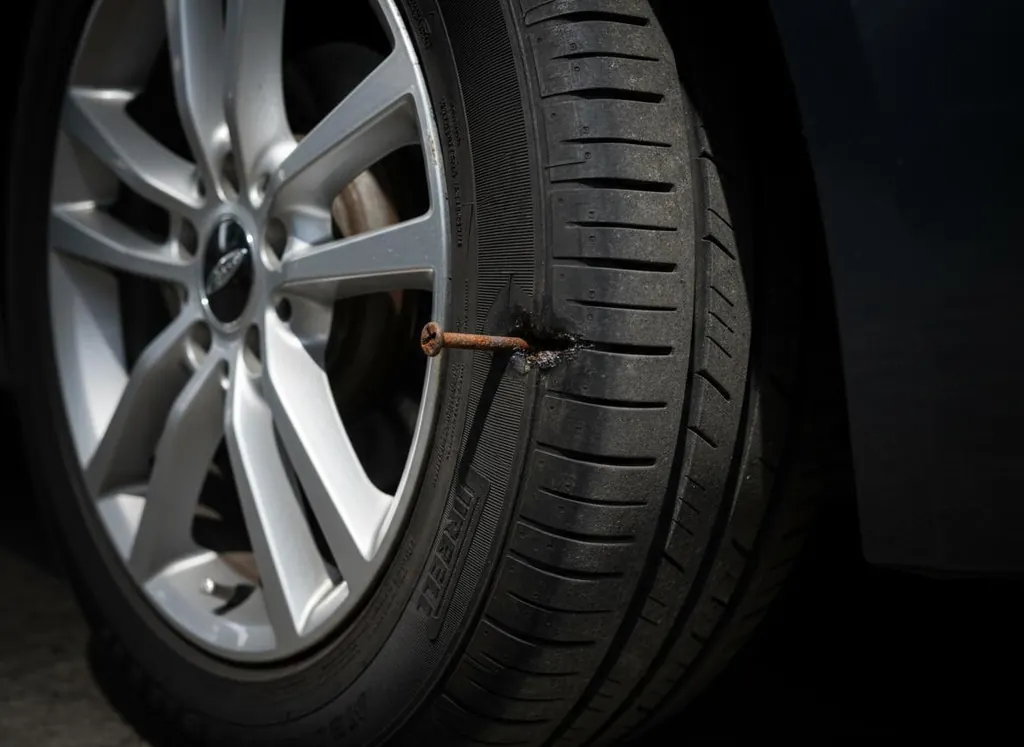
A nail in the tread does not have to mean a new tyre. We come to you anywhere in Oxford and Oxfordshire, take the wheel off, break the tyre down off the rim and inspect it from the inside — because that is the only way to know whether a puncture can legally and safely be repaired. If it can, you get a permanent repair. If it cannot, we will show you why and fit a replacement from the van.
Prefer to know the cost first? See how our pricing works.
What's included
- On-site assessment of the puncture position and the tyre condition
- Tyre removed from the rim for a full internal inspection
- Permanent combination plug-and-patch repair from the inside, to BS AU 159
- New valve fitted as part of the repair
- Wheel rebalanced after the repair
- Reinflation to placard pressure and torque-wrench refitting
- A straight answer, with the tyre in front of you, if it is not repairable
- No call-out charge
How it works
Do not drive on it
Running a tyre flat or very low destroys the sidewall from the inside and turns a repairable puncture into a scrap tyre. If you can, stop and call us.
We locate the damage
We find the object, mark the position and check whether it sits inside the repairable area of the tread.
Off the rim, inspected inside
The tyre comes off the wheel so we can look at the inner liner. Damage you cannot see from the outside is what decides the answer.
Repair or replace
A proper internal plug-and-patch, rebalanced and refitted — or a new tyre from the van if the standard says no.
What BS AU 159 actually allows
BS AU 159, the British Standard every reputable fitter works to, sets out exactly where a car tyre may and may not be repaired. It exists because a badly placed repair can fail at motorway speed, and because an external string plug pushed in without removing the tyre tells you nothing about the state of the inside.
In broad terms, a car tyre may be repaired only when the injury sits within the central three quarters of the tread width — the "minor repair area" — and the hole is no larger than 6 mm in diameter. The tyre must be removed from the wheel and inspected internally, the repair must be made from the inside with a combination plug and patch that fills the injury and seals the liner, and repairs must not overlap each other.
- Injury within the central three quarters of the tread — never the shoulder or sidewall
- Injury diameter no greater than 6 mm on a passenger car tyre
- Tyre demounted and inspected internally, every time
- Repaired from the inside with a combination plug and patch
- No overlapping repairs
When a puncture cannot be repaired
This is the part most people want a straight answer on, so here it is. We will not repair, and no reputable fitter should, in any of the following cases.
It is worth saying plainly: the most common reason a perfectly repairable nail becomes a new tyre is that the car was driven on it while flat. A few hundred metres at low speed is usually survivable. A few miles is not — the sidewall folds over on itself and the internal cords are destroyed even though the outside still looks fine. If you have a puncture, stop somewhere safe and call rather than trying to reach home.
- Damage in the sidewall or shoulder, including kerbing cuts and bulges
- Any bulge, lump or egg — that is a broken cord, not a surface mark
- Evidence the tyre has been run flat or very underinflated (a grey or powdery inner liner, or folded cord lines)
- Exposed, damaged or corroded cords
- Tread already at or below the 1.6 mm legal limit
- A previous repair that was done badly, or that the new injury overlaps
- Perished, crazed or age-hardened rubber, or bead damage
- Most run-flat tyres, where the manufacturer prohibits repair
Slow punctures, and the ones that are not punctures at all
If a tyre loses a few psi a week, it is worth finding out why rather than topping it up forever. A genuinely slow leak is often a small nail that has partly sealed itself, but a surprising share of "slow punctures" turn out to be nothing to do with the tread. Corrosion on the rim where the bead seats is very common on alloy wheels once they are a few years old, and a perished valve or a leaking TPMS sensor seal accounts for many of the rest.
Because we take the tyre off the rim anyway, we find those. A bead leak is cleaned up and resealed; a tired valve is replaced as standard with every repair we do. Driving around persistently underinflated is not a small thing — it wears the shoulders of the tyre, raises fuel consumption, and significantly increases the chance of a blowout on a hot motorway run.
What about the sealant in my boot?
Many cars now ship with a sealant canister and a compressor instead of a spare. They are a genuine get-you-home tool for a small tread puncture, and there is no shame in using one. Be aware of two things, though. Sealant is a temporary fix, usually rated for a limited distance and a reduced speed, and it is not a repair — the tyre still needs to come off and be assessed properly afterwards.
Sealant also coats the inside of the tyre and, in many cars, the TPMS sensor. Tell us if you have used it so we can clean the liner properly before repairing and check the sensor. It does not automatically write the tyre off, but a liner full of gel cannot be patched until it is cleaned back to bare rubber.
Where we cover for puncture repair
We are based in Oxford and cover the whole of Oxfordshire plus up to 25 miles beyond, including the A34, A40, A44, A420 and M40 corridors. If you are not sure whether we reach you, call and ask.
Puncture Repair — frequently asked questions
How long does a puncture repair take?
Around 30 minutes on site once we arrive, including taking the wheel off, demounting the tyre, inspecting it internally, repairing, rebalancing and refitting.
Is a repaired tyre as safe as a new one?
A repair carried out within BS AU 159 — right position, right size of injury, internal plug and patch, tyre inspected inside — is a permanent repair and is safe for the remaining life of the tyre at its full speed rating. Repairs made outside the standard, including external string plugs, are not.
Can you repair a run-flat tyre?
Usually not. Most run-flat manufacturers prohibit repair, because once the tyre has supported the car on its reinforced sidewall there is no reliable way to see the internal damage. We will check the specific tyre and tell you what the maker says.
Can you repair a puncture in the sidewall?
No, and nobody should. The sidewall flexes constantly as the wheel turns, so a patch there will work loose and the cords in that area cannot be restored. A sidewall injury means a replacement tyre.
I drove a couple of miles on it. Is it ruined?
Possibly, but not certainly — it depends on speed, load and how flat it really was. We will not guess. We take the tyre off and look at the inner liner, and if the tell-tale grey dust or folded cord lines are there, we will show you before recommending a replacement.
Do you repair punctures at night?
Yes. We operate 24 hours a day, 365 days a year, including bank holidays, and there is no night surcharge call-out fee.
Useful reading
Other services
- Mobile Tyre FittingNew tyres fitted and balanced at your home, your workplace or the roadside — no garage visit, no waiting room.
- Locking Wheel Nut RemovalKey lost, snapped or rounded off? We extract the nut at your location and leave you with wheel nuts you can actually undo.
- Emergency Tyre ReplacementBlowout, pothole damage or a shredded tyre at 2am — we carry stock, we work nights, and there is no call-out charge.
- Mobile Jump StartCar will not turn over? We come to you, start it properly, and tell you whether it is the battery or something else.
Need puncture repair now?
We are available 24/7 across Oxford and Oxfordshire, and we will quote you before we travel.